Algorithmic Trading Strategies: A Comprehensive Guide
Embark on the quest to mastering automated trading strategies with this in-depth guide. Uncover the secrets behind developing profitable trading algorithms and understand the dynamic world of quantitative finance. This comprehensive resource will equip you with the expertise to formulate your own systems, fine-tune their efficacy, and ultimately, realize your trading objectives.
- Investigate the fundamentals of algorithmic trading, including order types, risk management, and market data analysis.
- Learn popular automated trading strategies, such as trend recognition, mean oscillation, and arbitrage.
- Implement your strategies using a range of platforms designed for algorithmic trading.
Continuously monitor your performance and refine your strategies to concur to changing market conditions.
Building Profitable Algorithmic Trading Systems
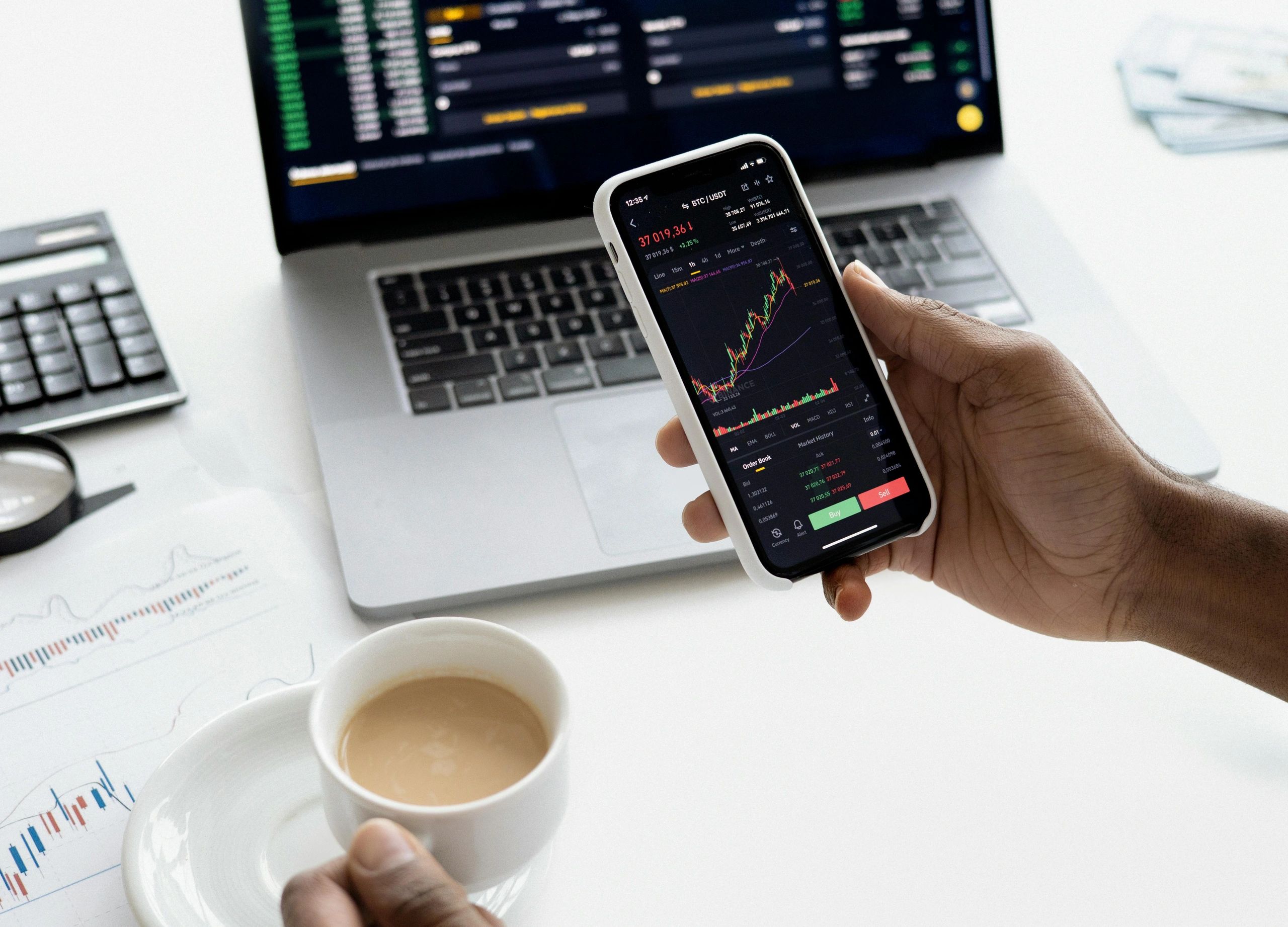
Crafting lucrative algorithmic trading systems is a complex process that requires a deep familiarity of financial markets, programming, and statistical analysis. Successful investors utilize robust algorithms to pinpoint profitable trading opportunities and implement trades automatically. It's essential to constantly evaluate your algorithms, adjust them based on market trends, and deploy robust risk management methods to minimize potential losses.
Building a profitable algorithmic trading system is a journey that requires dedication, patience, and a willingness to learn constantly.
Best Automated Trading Platform Review
Navigating the dynamic world of automated trading can be a daunting task. That's where thorough reviews come in, providing essential insights to help you select the right platform for your needs. Our meticulous review of the top automated trading platforms will guide you through their features, performance metrics, and user experience. We'll evaluate each platform based on factors like risk management, customer support, and ease of navigation.
- Explore the platforms that stand out in terms of algorithmic approach.
- Unlock knowledge about their testing capabilities and track record.
- Craft an informed decision based on our thorough analysis.
Whether you're a seasoned trader or just starting, this review will empower you to make the most intelligent choice for your automated trading journey.
Auto-Trading for Beginners
Stepping into the world of automated trading can seem daunting, but it doesn't have to be. Think of it like this: Instead of/Rather than/In place of manually placing trades throughout the day, you're creating/designing/building a set of rules that your computer follows/executes/implements. These rules, called algorithms, analyze/scrutinize/monitor market data and automatically/instantly/rapidly execute/trigger/launch trades based on pre-determined conditions. This means you can free up/devote/redirect your time to other aspects/pursuits/endeavors while your automated system works tirelessly/keeps running/stays active in the background.
- For example,/Say for instance/,Take, you could set up a rule that buys/purchases/acquires a particular stock whenever its price falls below/drops under/sinks to a certain level.
Consequently/Therefore/As a result, automated trading can potentially/possibly/may help you mitigate/reduce/minimize emotional decisions/responses/impulses in the market, which is often a key factor in successful/profitable/winning trading.
Algorithmic Trading: Strategies, Tools & Techniques
Algorithmic trading utilizes a set of pre-defined instructions to execute trades automatically based on market data and predefined parameters. These models can analyze vast amounts of information at high speeds, identifying patterns and trends that may be missed by human traders.
- Commonly used algorithmic trading strategies include mean reversion, trend market tracking, arbitrage, and market making.
- Traders can design their own algorithms or employ existing platforms that offer a range of pre-built strategies and tools.
- Fundamental tools for algorithmic trading include high-frequency market streams, programming languages, backtesting software, and risk management systems.
Harness Your Trading: Unleash the Power of Algorithms
Trading algorithms, often referred to as bots or Expert Advisors (EAs), have revolutionized the financial markets. These sophisticated programs can execute trades automatically based on pre-defined rules and market data analysis. By automating your trading, you can increase efficiency, reduce emotional bias, and potentially improve your overall returns. Algorithms can analyze vast amounts of information at lightning speed, identifying patterns and opportunities that may be missed by human traders. They also operate 24/7, ensuring that trades are executed promptly whenever market conditions become favorable. However, it's crucial to remember that algorithmic trading requires careful planning and risk management. Before implementing any automated system, thoroughly research different algorithms, backtest their performance, and set clear stop-loss orders to control potential losses.
Next-Generation Automated Trading Platforms
The financial landscape is undergoing a substantial transformation driven by the emergence of cutting-edge automated trading platforms. These platforms leverage machine learning algorithms to analyze market data in near real-time, enabling traders to deploy strategies with accuracy. Next-generation platforms offer comprehensive tools for order execution, empowering traders to maximize their returns while minimizing potential losses. Moreover, these platforms often provide accessible interfaces, opening access to advanced trading strategies for a wider range of participants.
Testing Automated Trading Strategies for Success
Backtesting automated trading strategies is a crucial step towards ensuring their viability and potential profitability. By examining historical data, traders can test their strategies in various market conditions, discovering strengths and weaknesses before deploying them with real capital.
A robust backtesting process involves choosing relevant historical data, implementing the trading strategy in a simulated trading environment, and carefully monitoring the results. Key metrics to evaluate include win rate, average profit per trade, maximum drawdown, and Sharpe ratio.
Through detailed backtesting, traders can optimize their strategies, reduce vulnerability, and increase the likelihood of success in live trading. It's an invaluable tool for constructing a sustainable and profitable automated trading system.
Boosting Automated Trading Performance with Machine Learning
Machine learning techniques are increasingly transforming the landscape of automated trading. By leveraging vast datasets and sophisticated computational methods, traders can enhance their strategies to achieve better returns. Essential to this refinement process is the persistent assessment and tuning of trading variables.
Machine learning algorithms can identify complex trends within market data that may not be immediately apparent to human traders. This power allows for the development of more accurate trading strategies that can execute trades with enhanced efficiency.
- For maximize the performance of automated trading systems, it is imperative to continuously track their outcomes.
- Deep learning algorithms are constantly being improved, leading to cutting-edge methods for optimizing automated trading.
- Ethical considerations ought to be considered into the implementation of machine learning-powered trading systems.
Quantitative Trading's Ascent: The Algorithm Takeover
The financial markets are undergoing a seismic shift. Once upon a time, human intuition and experience reigned supreme, but the tides are turning as algorithmic trading explodes to new heights. Quantitative trading, driven by complex mathematical models and high-speed computers, is revolutionizing the financial landscape. These sophisticated systems analyze vast amounts of data in milliseconds, identifying patterns and opportunities that elude human perception.
- , As a result of this evolution, traditional trading methods are fading increasingly obsolete
- , Moreover, the influence of quantitative analysts, or "quants," is undeniable as they develop and refine these innovative algorithms.
- , Despite its undeniable advantages, algorithmic trading also presents challenges that must be addressed.
, In essence, the rise of quantitative trading heralds a new era in finance, one characterized by unprecedented speed, efficiency, and complexity.
Leverage Automated Trading Signals: Generate and Execute Trades Automatically
Automated trading signals offer a efficient means to streamline your trading strategy. By leveraging algorithmic methods, these signals can promptly analyze market data and generate actionable buy or sell instructions. This convenience frees up your time to focus on other aspects of trading, such as research, while ensuring that trades are executed based on established criteria. The result is a more systematic trading experience with the potential to enhance returns.
Harnessing Market Data for Automated Trading Strategies
Automated trading strategies are increasingly reliant on real-time market data. By implementing sophisticated algorithms and interpreting vast volumes of market data, traders can discover profitable opportunities. Previous market data is crucial for evaluating trading strategies and optimizing their performance.
Real-time market information streams provide traders with the current price movements, order book, and events. This critical data allows for rapid decision-making and implementation of trades. By leveraging market data effectively, traders can improve their chances of success in the dynamic world of automated trading.
Automated Trading Risk Management: Protecting Your Capital
Venturing into the realm of automated trading provides a unique set of chances to enhance your financial outcomes. However, it's imperative to implement robust risk management strategies to safeguard your capital. Automated systems, while capable of executing trades at lightning speed and with precision, are not immune to market fluctuations and unforeseen situations.
A well-defined risk management framework should encompass several key elements: 1. Define your risk tolerance and set clear stop-loss orders to limit potential losses. 2. Diversify your trading portfolio across various asset classes to minimize the impact of any single investment's actions. 3. Regularly review your automated trading platforms for effectiveness and make adjustments as appropriate. Finally, stay informed about market trends and economic factors that could affect your investments.
- Remember that automated trading is a complex undertaking that requires careful planning, execution, and ongoing monitoring.
Automated Trading: A Competitive Advantage in the Financial Markets
In the dynamic and fluctuating landscape of financial markets, securing a competitive edge is paramount. Automated trading has emerged as a powerful tool that empowers traders to enhance their performance and navigate the complexities of modern finance. By leveraging sophisticated algorithms and real-time data analysis, automated trading systems can implement trades with exceptional speed and precision, often surpassing human capabilities in terms of reaction time and order execution. This digitization allows traders to identify and capitalize on fleeting market opportunities, minimize risk through informed position management, and continuously monitor market trends.
The Coming Transformation in Trading: Automation and AI's Impact
The financial/trading/market landscape is rapidly evolving, with automation/artificial intelligence/machine learning poised to revolutionize/transform/disrupt the way we trade/invest/execute transactions. Traders are increasingly embracing/adopting/implementing these technologies to gain a competitive edge/advantage/upper hand, streamlining/automating/optimizing their processes/strategies/approaches and making data-driven/intelligent/informed decisions. AI-powered algorithms can analyze vast amounts of data/process complex market trends/identify patterns with speed and accuracy, flagging opportunities/predicting price movements/mitigating risks that may be invisible read more to human traders. As these technologies mature/advance/develop, we can expect/anticipate/foresee a future where trading becomes more efficient/faster/automated, accessible to a wider range of investors/democratized/available to everyone.
Case Studies in Successful Automated Trading
The world of automated trading provides a wealth of fascinating case studies that demonstrate the effectiveness of algorithmic methods. These examples highlight how sophisticated systems can exploit market trends with precision, consistently generating substantial profits. By investigating these case studies, traders can obtain valuable insights into the potential of automated trading and shape their own investment plans.
- Consider, for example, a quantitative hedge fund that developed an system to forecast stock market volatility based on real-time news sentiment.
- Another case involves a retail trader who employed an automated trading system to execute high-frequency trading strategies, regularly profiting from small price movements.
- Several successful automated trading projects have emerged in the copyright space, where bots are used to execute transactions on marketplaces with impressive accuracy.
High-Speed Trading: Unveiling the Power of Algorithms
High-frequency trading/algorithmic execution/market making (HFT) revolutionizes/transforms/disrupts financial markets by employing sophisticated algorithms to execute vast/massive/huge numbers of trades at incredible speeds/rates/velocities. These algorithms, often running/executing/operating on specialized hardware, can analyze market data and make trading/investment/execution decisions in milliseconds. HFT proponents argue that it boosts/enhances/improves market efficiency by providing liquidity and narrowing bid-ask spreads. Critics, however, express concerns/raise apprehensions/highlight risks about its potential for market manipulation and amplifying/exacerbating/intensifying volatility.
Crafting Custom Algorithmic Trading Strategies
Successfully executing custom algorithmic trading strategies involves a thorough understanding of market dynamics and programming concepts. Traders must leverage their statistical skills to construct strategies that optimally harness price movements. This process entails careful assessment of various factors, including market sentiment, as well as the deployment of appropriate risk management techniques.
Algorithmic Trading for Day Traders: Maximize Profits with Robots
Day trading presents a risky world where fortunes might be made. With the advent of automated strategies, day traders now have the opportunity to boost their profits by harnessing the power of robots. These intelligent software can process trades at lightning velocity, analyzing market data and identifying profitable opportunities with accuracy that humans simply could not.
- Algorithmic trading systems provide several key advantages for day traders, including the capability to execute trades swiftly than humans, reduce emotional impacts, and steadily monitor market movements 24/7.
- Moreover, these systems can simulate methods efficiently, allowing traders to optimize their outcomes.
While automated trading presents immense opportunities, it's crucial for day traders to comprehend the pitfalls involved. Properly investigating different systems, constructing a robust trading strategy, and steadily monitoring performance are crucial for attaining success in this evolving market.
Comprehending the Psychology of Automated Trading
The realm of automated trading often presents a unique psychological challenge. While algorithms strive for reason, human traders are susceptible to emotions that can affect their decisions. Understanding this interplay between technology and human behavior is essential for prosperity in the automated trading landscape.
It's important to recognize that even with sophisticated programs, human traders must retain a level of emotional discipline. Factors like anxiety and ambition can lead to irrational actions that undermine the very objectives of automation.
Successful automated trading requires a blend of technical expertise and psychological awareness. By developing self-awareness and implementing strategies to manage emotional impulses, traders can enhance the potential of automated trading.